When asking a demographics postcode question or asking questions on a map survey, your data will be reverse geocoded.
It is a process which adds to a latitude and longitude other related geolocalised pieces of information.
Demographics postcode question (benchmark) as well as map pin questions can now be attached to other types of data to help understand how geolocalised answers are: road, parish, Borough, district.
How does it work?
All postcode questions (from our benchmark) now automatically find the appropriate postcodes, increasing the chance to match those against:
latitude / longitude
borough
ward
district
parlimientary constituency
On map questions, latitude and longitude is automatically reverse geocoded and gathers:
postcode
borough
ward
district
parlimientary constituency
Data then appears in your tables, exports and can be filtered.
This allows to analyse the data geospatially, adding a whole new angle on consultations. We have added new filters about road names, wards, boroughs and districts to create audiences and study or reach them directly.
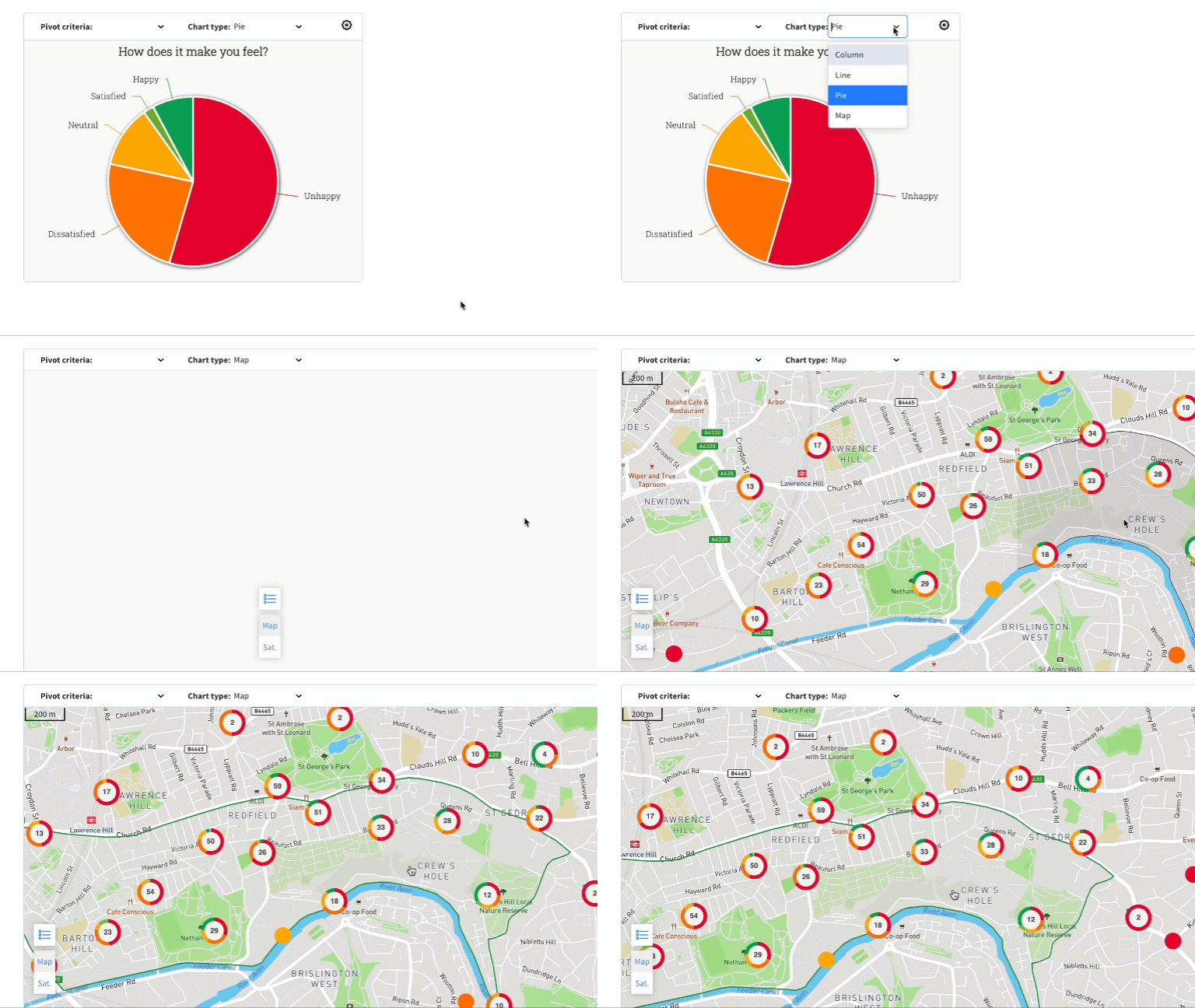
In your contribution dashboard, you can also visualise any question from a map survey into map charts.

Still unsure about anything? There's lots more information here on the Commonplace Help Centre - alternatively, contact the support team and we'll be happy to help 👋